1 AI Colleague, 15 Autonomous Jobs, 0 Cloud Servers
An AI that wakes up at 6am, reads cybersecurity threat feeds, writes a finance newsletter, scouts business opportunities, runs a four-perspective security audit, and reports back through Slack. Before I've checked my phone. From a Mac mini under my desk.
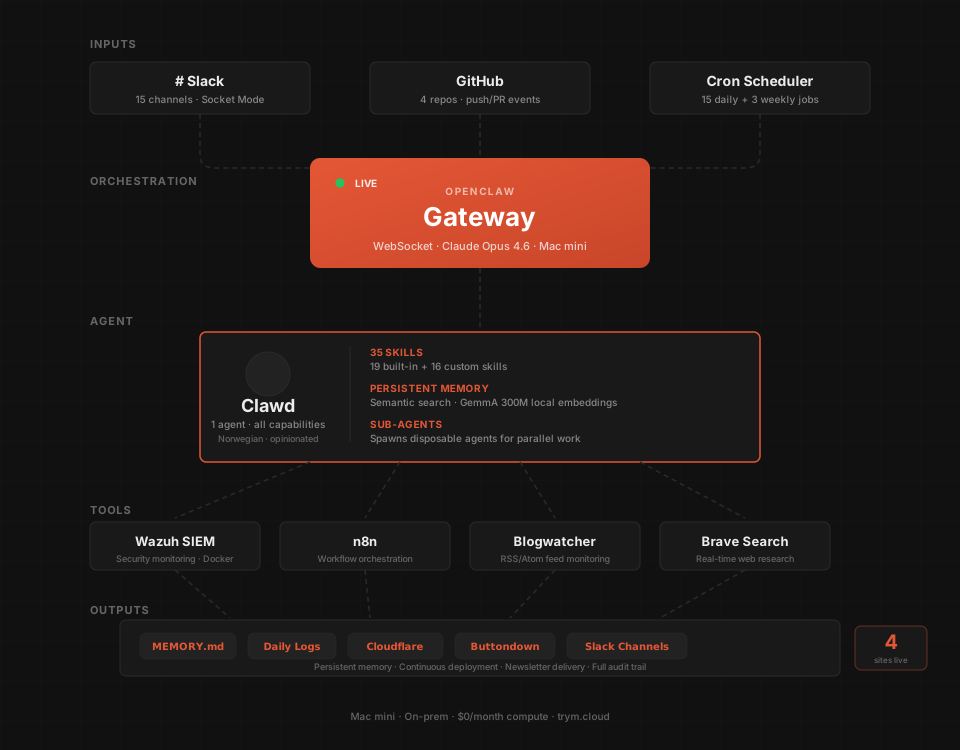
Most "AI agent" demos stop at a chatbot that can search the web. I wanted to see what happens when you give an AI a name, a personality, memory that persists across sessions, and a real job to do every day. The result is Clawd, an AI colleague that runs 15 autonomous workflows and maintains 4 production websites. It's been doing this reliably for weeks from a single Mac mini.
The agent
One agent. Not five. Not a swarm. The old version of this page described five specialized agents coordinating through Slack. The reality turned out simpler and more effective: one capable agent with the right tools and enough context.
The daily pipeline
Every morning, 12 jobs run in sequence. By 08:30, I have a threat briefing, an AI news digest, a published finance newsletter, a Microsoft Security changelog, repo health status, product opportunities, consulting leads, and a personal briefing with my deadlines. Three more patrol GitHub during the day. One runs a security audit at night.
How it works
Slack as the nervous system
Every job delivers to a specific Slack channel. Threat intel goes to #faglig. Dev ops goes to #dev. Personal briefings go to DM. The full log of everything the agent does is searchable in Slack. Audit trail by default.
Markdown memory with semantic search
No vector database in the cloud. A local GemmA 300M embedding model runs semantic search over markdown files. Long-term memory in MEMORY.md, daily logs in timestamped files, organized into domains, projects, and reference material. Git-backed.
35 skills
Each skill is a self-contained module with its own SKILL.md instructions. 19 built-in (GitHub, email, Apple Notes/Reminders, RSS monitoring, PDF editing, macOS UI automation) and 16 custom (threat briefs, market scouting, newsletter production, security audits).
Sub-agent delegation
When a task needs parallel execution, Clawd spawns disposable sub-agents. Coding across repos, research with multiple sources, batch operations. They inherit the right context, do the work, report back, and terminate.
Production sites
Tech stack
Security
Built by a security consultant. Not as a tagline. As the actual design constraint.
On-prem by design
All compute runs on a Mac mini at home. No EC2. No cloud VMs. Memory, credentials, and agent state never leave the local machine. Zero cloud attack surface for the infrastructure itself.
Nightly security audit
A Security Council job runs at 03:30 every night. Four automated perspectives (red team, blue team, data privacy, operational realism) analyze the workspace, read actual code, and report findings with severity ratings.
Wazuh SIEM
Full Wazuh stack running in Docker. Custom detection rules for OpenClaw-specific events. Identity monitoring. The same tooling a SOC would use, applied to a personal AI system.
Defense in depth
Scoped credentials per context. Secret redaction in all outputs. Content sanitization against prompt injection. Full audit trail in Slack, every action logged and searchable.
Questions? Let's talk.
If you're building something similar or want to compare notes on AI agent security, reach out.